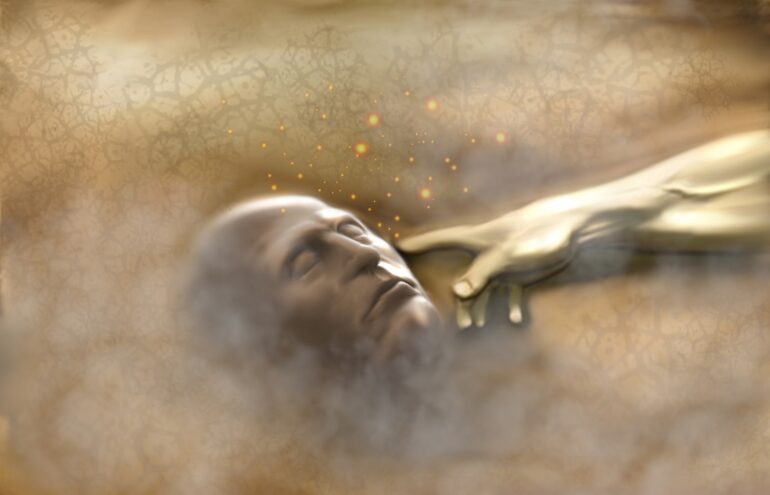
The question of whether Allah created Adam in His own likeness or image has been discussed and explained in various Islamic texts. In the Qur’an, it is stated that Allah created human beings in the best form (Al-Tin 95:4) and formed them perfectly (Ghafir 40:64). Additionally, a hadith narrated from Abu Hurayrah quotes the Prophet saying that “Allah created Adam in His image, and he was sixty cubits tall.” When Adam was created, Allah instructed him to greet a group of angels, and the words they used in return became the standard greeting for Adam and his descendants (Al-Bukhari 6227 and Muslim 2841). Another hadith also mentioned that when engaging in conflict, one should avoid striking the face since Allah created Adam in His image (Muslim 2612).
هذه الأحاديث والروايات تعني أن لله صورة أو شكل مميز لا يمكن مقارنته بسمات المخلوقات. ومع ذلك، فإن الضمير "صورته" في عبارة "على صورته" يشير إلى الله، مما يشير إلى وجود صلة فريدة بين صورة الله وجوهره الإلهي. قد شرح العلماء المسلمون أن كلمة "صورة" في هذه الأحاديث، مثل الأسماء والصفات الأخرى المذكورة في النصوص الإسلامية، يمكن أن تطبق أيضًا على المخلوقات بشكل محدود. ولكن عندما يُطبق على الله، فإنها تحمل معنى وأهمية فريدة.
Ibn Taymiyah clarified that the concept of Allah’s image should be understood in the context of divine attributes. Just as everything that exists must possess attributes, everything that exists by itself must also have a form or image. It is inconceivable for something that exists independently not to have a form or image. Therefore, Allah having an image is not contradictory to His divine nature (Naqd al-Ta’sees, 3:396).
ومع ذلك، فقد ناقش بعض العلماء تفسير الضمير في هذه الأحاديث، مشيرين إلى أنه يشير إلى شيء غير الله. ظهر هذا الرأي خلال القرن الثالث الهجري مع ظهور الجهمية، الفرقة المنحرفة. قام علماء بارزون مثل أبو ثور وابن خزيمة وأبو الشيخ الأصفهاني بقبول هذه النقطة من النظر. ومع ذلك، أكد معظم العلماء، بما في ذلك الأجيال الأولى (السلف)، أن الضمير يشير إلى الله. وانتقد علماء الإسلام البارزين ونفوا هذا الفهم (تأويل مختلف الأحاديث، صفحة 221؛ شرح كتاب التوحيد من صحيح البخاري 2: 41).
It is important to note that one must not draw parallels or liken Him to His creation when discussing Allah’s image. The attributes of Allah are unique, perfect, and free from any imperfection or limitation. On the other hand, humans possess finite and imperfect attributes that cannot be compared to the attributes of Allah. The Qur’an emphasizes that there is nothing like Allah, and He is the All-Hearer, the All-Seer (al-Shura 42:11). There is no one equal or comparable to Him (al-Ikhlas 112:4). (Majmoo’ Fataawa al-Shaykh, 4:226)
Considering this understanding, striking someone’s face or cursing them with deformity is explicitly prohibited. The hadith that forbids striking the face clarifies that this is because Allah created Adam in His image. “When any one of you fights his brother, let him avoid the face, for Allah created Adam in His image” (Muslim 2612). Such acts would disrespect the sanctity of Allah’s creation.
علاوة على ذلك، يشير ذكر أن أول مجموعة تدخل الجنة يتم وصفها بصورة القمر إلى إشارة إلى نورها ونقائها وجمالها (البخاري 3245 ومسلم 2834). ومع ذلك، لا يعني هذا المقارنة تشابهًا دقيقًا، بل يهدف إلى توضيح مكانتهم المرتفعة وتميزهم.
In conclusion, the concept of Allah’s image should be understood within the framework of divine attributes. Allah created Adam in His image, signifying a connection between Adam’s physical features and Allah’s divine attributes. However, this does not imply a resemblance or likeness between Allah and His creation. Allah’s attributes are perfect and infinite, while human attributes are limited and imperfect. It is impermissible to strike someone’s face or curse them with deformity. The first group to enter Paradise being compared to the moon is a metaphorical expression to highlight their purity and beauty, not an exact likeness (Sharh al-Aqidah al-Wasitah by Shaykh Muhammad ibn Uthaymeen, 1:107, 293).
The biblical passage from Genesis 1:27 conveys the belief that God uniquely created humanity in His own likeness or Image. The verse states, “So God created mankind in His own image, in the image of God he created them; male and female he created them.”
This passage emphasizes the inherent value and dignity of every human being, as they are fashioned after the divine image. This understanding implies that each person possesses qualities and characteristics reflective of God’s nature. Furthermore, the verse highlights the binary nature of human creation, affirming the existence of both male and female genders as integral components of God’s design.
تعتبر هذه الآية في سفر التكوين 1: 27 أساسًا أساسيًا للاعتقاد في قدسية الحياة ومساواة جميع الأفراد، بغض النظر عن جنسهم. وتؤكد فكرة أن كل شخص، بوصفه حاملًا لصورة الله، لديه قيمة فطرية ويستحق الاحترام والرحمة والمحبة.