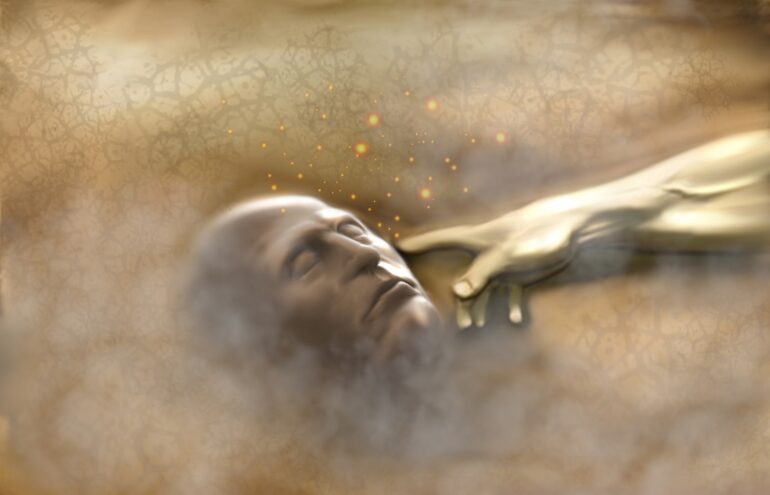
The question of whether Allah created Adam in His own likeness or image has been discussed and explained in various Islamic texts. In the Qur’an, it is stated that Allah created human beings in the best form (Al-Tin 95:4) and formed them perfectly (Ghafir 40:64). Additionally, a hadith narrated from Abu Hurayrah quotes the Prophet saying that “Allah created Adam in His image, and he was sixty cubits tall.” When Adam was created, Allah instructed him to greet a group of angels, and the words they used in return became the standard greeting for Adam and his descendants (Al-Bukhari 6227 and Muslim 2841). Another hadith also mentioned that when engaging in conflict, one should avoid striking the face since Allah created Adam in His image (Muslim 2612).
این احادیث و روایات دلالت دارند که خداوند دارای صورت و یا (سوره) متمایز است که قابل مقایسه با صفات موجودات مخلوق نیست. اما ضمیر «او» در عبارت «به صورت او» اشاره به خداوند دارد و نشان میدهد که بین صورت خدا و ذات الهی او ارتباطی منحصر به فرد وجود دارد. علمای مسلمان توضیح داده اند که واژه «تصویر» در این روایات، مانند سایر اسماء و صفات ذکر شده در متون اسلامی، به صورت محدود بر موجودات مخلوق نیز اطلاق می شود. اما هنگامی که در مورد خداوند به کار می روند، دارای معنی و اهمیت منحصر به فردی هستند.
Ibn Taymiyah clarified that the concept of Allah’s image should be understood in the context of divine attributes. Just as everything that exists must possess attributes, everything that exists by itself must also have a form or image. It is inconceivable for something that exists independently not to have a form or image. Therefore, Allah having an image is not contradictory to His divine nature (Naqd al-Ta’sees, 3:396).
با این حال، برخی از علما در مورد تفسیر ضمیر در این احادیث به بحث پرداختهاند و احتمال میدهند که این ضمیر به غیر الله اشاره دارد. این دیدگاه در قرن سوم (پس از هجری) با ظهور فرقه انحرافی الجهمیه پدیدار شد. دانشمندان برجسته ای مانند ابوثور، ابن خزیمه و ابوالشیخ اصفهانی این دیدگاه را پذیرفتند (نقد التاسیس، 3: 202). با این وجود، اکثر علما، از جمله نسل های اولیه (سلف)، قویاً تأیید کردند که ضمیر اشاره به الله دارد. علمای برجسته اسلام و سنت اهل سنت از علمای منکر این برداشت انتقاد کردند (تأویل مختلف الحدیث، 221؛ شرح کتاب التوحید من صحیح البخاری، 2: 41).
It is important to note that one must not draw parallels or liken Him to His creation when discussing Allah’s image. The attributes of Allah are unique, perfect, and free from any imperfection or limitation. On the other hand, humans possess finite and imperfect attributes that cannot be compared to the attributes of Allah. The Qur’an emphasizes that there is nothing like Allah, and He is the All-Hearer, the All-Seer (al-Shura 42:11). There is no one equal or comparable to Him (al-Ikhlas 112:4). (Majmoo’ Fataawa al-Shaykh, 4:226)
Considering this understanding, striking someone’s face or cursing them with deformity is explicitly prohibited. The hadith that forbids striking the face clarifies that this is because Allah created Adam in His image. “When any one of you fights his brother, let him avoid the face, for Allah created Adam in His image” (Muslim 2612). Such acts would disrespect the sanctity of Allah’s creation.
به علاوه، ذکر اولین گروهی که وارد بهشت میشوند به صورت ماه بیانگر درخشندگی، پاکی و زیبایی آنهاست (بخاری 3245؛ مسلم 2834). با این حال، این مقایسه دلالت بر شباهت دقیق ندارد، بلکه در خدمت نشان دادن جایگاه و تمایز برتر آنهاست.
In conclusion, the concept of Allah’s image should be understood within the framework of divine attributes. Allah created Adam in His image, signifying a connection between Adam’s physical features and Allah’s divine attributes. However, this does not imply a resemblance or likeness between Allah and His creation. Allah’s attributes are perfect and infinite, while human attributes are limited and imperfect. It is impermissible to strike someone’s face or curse them with deformity. The first group to enter Paradise being compared to the moon is a metaphorical expression to highlight their purity and beauty, not an exact likeness (Sharh al-Aqidah al-Wasitah by Shaykh Muhammad ibn Uthaymeen, 1:107, 293).
The biblical passage from Genesis 1:27 conveys the belief that God uniquely created humanity in His own likeness or Image. The verse states, “So God created mankind in His own image, in the image of God he created them; male and female he created them.”
This passage emphasizes the inherent value and dignity of every human being, as they are fashioned after the divine image. This understanding implies that each person possesses qualities and characteristics reflective of God’s nature. Furthermore, the verse highlights the binary nature of human creation, affirming the existence of both male and female genders as integral components of God’s design.
این قسمت در پیدایش 1: 27 به عنوان مبنایی اساسی برای اعتقاد به تقدس زندگی و برابری همه افراد، صرف نظر از جنسیت، عمل می کند. این بر این تصور تأکید می کند که هر فردی به عنوان حامل تصویر الهی دارای ارزش ذاتی است و سزاوار احترام، شفقت و محبت است.